
.png)
The founder trap is not a failure of ambition. It is a consequence of success.
The business grew because the founder was exceptional — at selling, at delivering, at problem-solving, at holding the whole thing together through force of will and personal involvement. Every early win was a product of the founder's direct contribution. And so the organisation was built around that contribution — with the founder at the centre of every significant decision, every important relationship, every critical process.
That model works beautifully at a certain scale. And then it stops working.
The business cannot grow beyond the founder's bandwidth. Key hires underperform because they are never given the authority to actually lead. Decisions queue up waiting for the founder's attention. The founder is the bottleneck — not because they are incompetent, but because the organisation was designed around their competence rather than around a system that could operate independently of it.
The founder trap announces itself through a set of symptoms that are easy to misread as external problems rather than structural ones.
Every significant decision comes to you. Not because your team cannot decide — because the organisation was never built to decide without you.
Your best people are underperforming. Not because they are not good — because they have been hired into an organisation where the real authority sits with you, and everyone knows it.
You are the most important relationship your clients have with the business. Which means every client relationship is one departure away from being at risk.
You are busy all the time — but the business is not growing at the rate that level of busyness should produce. Because your busyness is operational, not strategic. You are running the machine, not designing it.
The shift from operator to architect is not a management technique. It is an identity shift — and that is why most founders struggle with it.
As an operator, your value is in what you do. As an architect, your value is in what you build. The output changes from decisions made to systems designed. From problems solved to capabilities built. From clients served to organisations created that serve clients better than you could alone.
That shift requires the founder to let go of the thing that made them successful — their direct involvement in the operation — before they have fully proven that the alternative works. It requires trusting people who have not yet earned that trust through demonstrated performance. It requires accepting a period of apparent reduced effectiveness while the new model is being built.
Most founders will not do this voluntarily. They will do it when the cost of staying in the trap becomes more painful than the cost of making the transition.
The transition from operator to architect begins with a single question.
What would this business need to look like for it to operate at its current level without my direct involvement for thirty days?
Not forever. Not at scale. Just for thirty days.
The answer to that question is a diagnostic. Every area where the business cannot function without you for thirty days is an area where you are the system — and where you need to build a system that replaces you.
Start there. Document the decisions you make. Identify the ones that only you can make and the ones that someone else could make if they had the right information and the right authority. Build the process for the second category. Delegate the decision. Keep the accountability.
Do this consistently, and within six months the business will look different. Not because you have worked harder — but because you have stopped doing the work that keeps the business running and started doing the work that makes it grow.
That is the difference between an operator and an architect. And it is the most important transition a founder will ever make.
I work with a small number of founders and CEOs each quarter — people who are done with surface-level advice and ready to commit to a strategy that actually gets built.
.jpg)
Yes. While my primary market is the Gulf region, I have worked across four countries and continue to take international engagements. The JK Framework is designed to work across markets — with adjustments for local context where relevant. If you are outside the UAE, reach out and we can discuss whether the engagement makes sense for your situation.
A small number — deliberately. I do not scale my consulting practice by adding more clients. I scale it by going deeper with fewer. At any given time I am working with a handful of founders and CEOs at the Full Engagement level. This ensures every client gets the full version of me — not a diluted version spread across too many engagements at once.
Growth-stage businesses and scaling companies — typically with revenue between $ 1 Million and above, or startups that have found product-market fit and are ready to build the commercial engine. I also work with larger organisations through my assessment and advisory work. If you are not sure whether your business is the right fit, send me a message and I will be honest with you.
Both. The Strategy Sprint is a fixed-scope, fixed-timeline project. The Full Engagement begins as a defined project through Stages 01 to 04 and then transitions to a quarterly retainer for the Evolve stage. The structure is designed to give you certainty at the beginning and flexibility as the engagement matures.
Three ways. First — I diagnose using an EFQM-informed methodology that most consultancies do not have access to. Second — I stay in the room through execution, which most consultancies do not do. Third — every framework I recommend is one I have tested on my own businesses. I eat what I cook. A consultancy sells frameworks built by others. I sell frameworks built by experience and success stories with real impact in growth.
Yes. Strategic Compass is the consulting firm through which all formal engagements are conducted. Visiting strategicompass.com gives you the full picture of available services, engagement structures, and how to apply for an engagement. Both this site and Strategic Compass lead to the same conversations — they are different entry points for the same work.
Most strategies never reach the revenue. Let's close the gap between your plan and your growth.
Whether you need a quick diagnostic or a full transformation, there's a path that fits.
.jpg)
A focused two-to-three week engagement - diagnose the core challenge and deliver a clear strategic direction. No fluff. No endless discovery. Just the answer you need to move.

The full five-stage journey — Diagnose, Architect, Align, Execute, Evolve. I stay in the room through execution. This is where the deepest transformation happens.

Not motivational keynotes — practical frameworks that audiences can use the very next morning. Available for conferences, executive offsites, and MBA programmes.
.png)
"He doesn't just craft messages — he builds narratives that resonate deeply with customers and stakeholders alike. His strategic insights have consistently helped organisations scale profitably and sustainably, even in highly competitive markets."
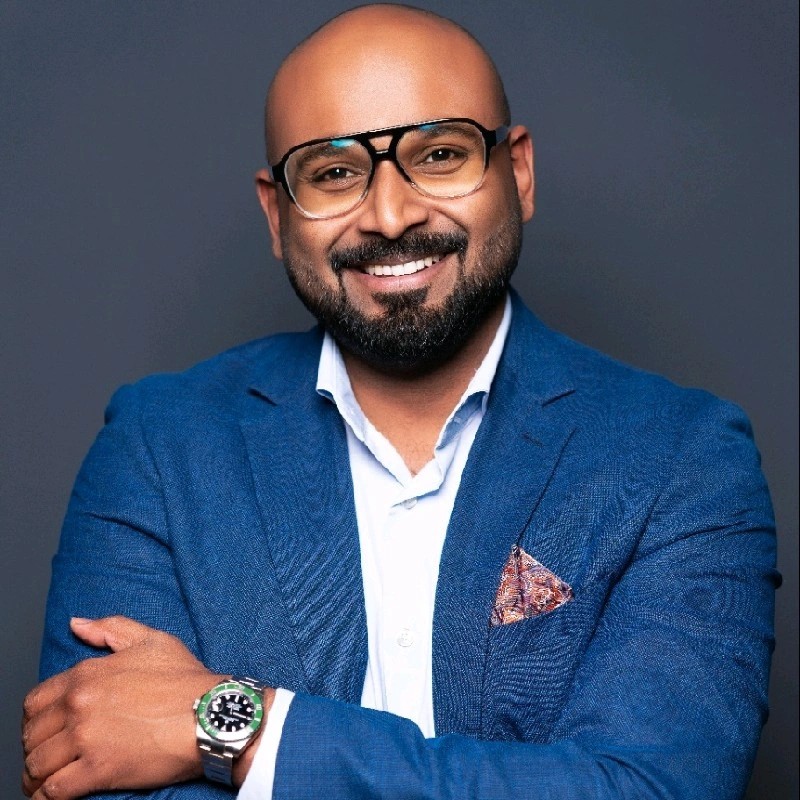

"What began as a professional engagement soon evolved into a strong friendship and partnership. Jamal's strategic thinking and genuine commitment have made him an invaluable part of our journey."