
.png)
Most businesses arrive at their prices through a process that involves looking at what competitors charge and positioning themselves slightly above, at, or below that number. This is not a pricing strategy. It is a pricing reflex — and it guarantees that your margin will always be determined by your least disciplined competitor.
Pricing strategy starts with a single question that most businesses never ask honestly: what is the value we deliver to our customer, in their terms, measured against the alternatives available to them?
If you cannot answer that question with specificity — not in general terms about quality or service, but in specific terms about outcomes, savings, or transformations — then you do not have enough information to price strategically.
There are three pricing models that work consistently across professional services and B2B businesses in the Gulf region.
Value-based pricing — charging relative to the outcome delivered, not the time invested. This requires you to be able to quantify the impact of your work, which requires you to measure it.
Tiered packaging — offering defined levels of engagement at defined price points, which allows customers to self-select into the right relationship and removes the single-price negotiation entirely.
Recurring architecture — designing the engagement so that ongoing value justifies ongoing payment, turning a transaction into a relationship.
Pricing is the single highest-leverage decision in a business. A 10% improvement in price produces a greater improvement in profit than a 10% improvement in volume — because price improvement is pure margin. Volume improvement carries cost.
Most businesses ignore this and focus on selling more. The right question is almost always: how do we earn more from what we already sell?
I work with a small number of founders and CEOs each quarter — people who are done with surface-level advice and ready to commit to a strategy that actually gets built.
.jpg)
Yes. While my primary market is the Gulf region, I have worked across four countries and continue to take international engagements. The JK Framework is designed to work across markets — with adjustments for local context where relevant. If you are outside the UAE, reach out and we can discuss whether the engagement makes sense for your situation.
A small number — deliberately. I do not scale my consulting practice by adding more clients. I scale it by going deeper with fewer. At any given time I am working with a handful of founders and CEOs at the Full Engagement level. This ensures every client gets the full version of me — not a diluted version spread across too many engagements at once.
Growth-stage businesses and scaling companies — typically with revenue between $ 1 Million and above, or startups that have found product-market fit and are ready to build the commercial engine. I also work with larger organisations through my assessment and advisory work. If you are not sure whether your business is the right fit, send me a message and I will be honest with you.
Both. The Strategy Sprint is a fixed-scope, fixed-timeline project. The Full Engagement begins as a defined project through Stages 01 to 04 and then transitions to a quarterly retainer for the Evolve stage. The structure is designed to give you certainty at the beginning and flexibility as the engagement matures.
Three ways. First — I diagnose using an EFQM-informed methodology that most consultancies do not have access to. Second — I stay in the room through execution, which most consultancies do not do. Third — every framework I recommend is one I have tested on my own businesses. I eat what I cook. A consultancy sells frameworks built by others. I sell frameworks built by experience and success stories with real impact in growth.
Yes. Strategic Compass is the consulting firm through which all formal engagements are conducted. Visiting strategicompass.com gives you the full picture of available services, engagement structures, and how to apply for an engagement. Both this site and Strategic Compass lead to the same conversations — they are different entry points for the same work.
Most strategies never reach the revenue. Let's close the gap between your plan and your growth.
Whether you need a quick diagnostic or a full transformation, there's a path that fits.
.jpg)
A focused two-to-three week engagement - diagnose the core challenge and deliver a clear strategic direction. No fluff. No endless discovery. Just the answer you need to move.

The full five-stage journey — Diagnose, Architect, Align, Execute, Evolve. I stay in the room through execution. This is where the deepest transformation happens.

Not motivational keynotes — practical frameworks that audiences can use the very next morning. Available for conferences, executive offsites, and MBA programmes.
.png)
"He doesn't just craft messages — he builds narratives that resonate deeply with customers and stakeholders alike. His strategic insights have consistently helped organisations scale profitably and sustainably, even in highly competitive markets."
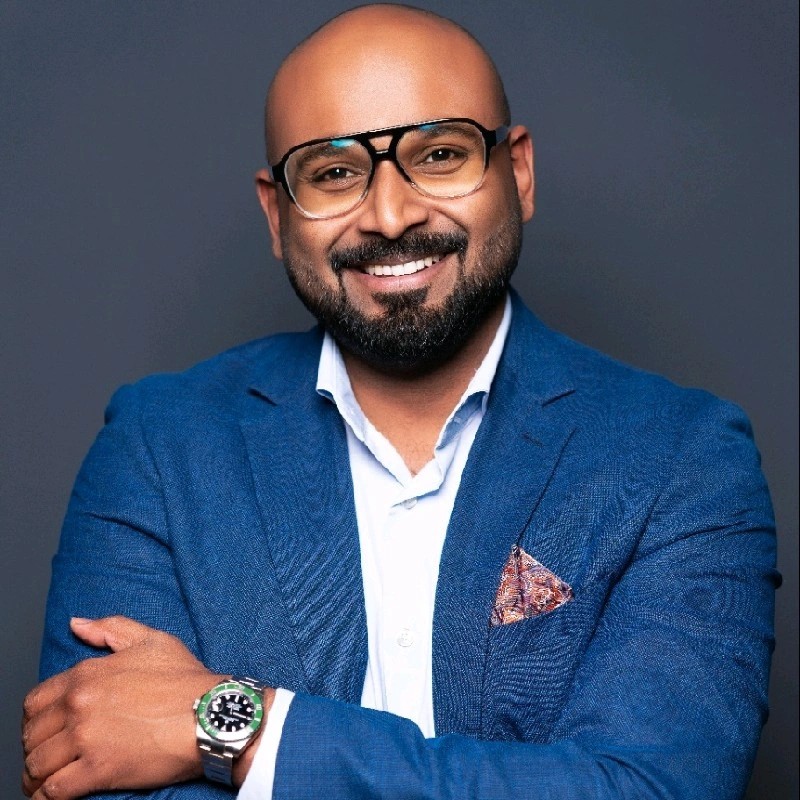

"What began as a professional engagement soon evolved into a strong friendship and partnership. Jamal's strategic thinking and genuine commitment have made him an invaluable part of our journey."