
.png)
Every strategy engagement I have ever seen that failed — and I have seen many, both from the outside as an EFQM Senior Assessor and from the inside as a practitioner — failed for the same reason.
Not because the strategy was wrong. Because the diagnosis was never done properly.
The business came to the strategy session with a problem statement already written. The consultant accepted it. The strategy was built around it. And six months later, when the results were not materialising, everyone looked at the strategy — at the market positioning, the resource allocation, the execution plan — and wondered what went wrong.
Nobody looked at the diagnosis. Because there was no diagnosis. There was only an assumption.
As a Certified EFQM Expert and Senior Assessor — trusted to evaluate the strategy of some of the UAE's largest organisations across four government excellence award bodies — I have spent years learning what separates organisations that genuinely perform from those that merely appear to.
The single most consistent finding is this: the organisations that perform do not assume they know what the problem is. They find out.
They invest real time in diagnosis — not a one-hour leadership workshop where the CEO's view dominates the conversation, but a structured, evidence-based process that looks at what is actually happening at every level of the organisation. They talk to the people closest to the problems. They look at the data without filtering it through their preferred narrative. They surface the gap between what leadership believes is happening and what is actually happening.
That gap — and it is almost always there — is where the real strategy begins.
Failure 01 — Accepting the presented problem. The CEO says the problem is that the sales team is underperforming. The consultant accepts this and builds a sales strategy. But the real problem is that the product has drifted from what the market actually needs — and no sales strategy will fix a product-market fit problem. The diagnosis was never done. The presented problem was accepted as the real one.
Failure 02 — Proximity bias. When you are inside a business, you cannot see it clearly. The leader who built the company from scratch has the deepest emotional investment in the decisions that created the current situation. They are the least likely person to accurately diagnose what is broken — not because they are not intelligent, but because proximity creates blind spots that are invisible to the person standing too close. An honest external diagnostic is not a luxury. It is a requirement.
Failure 03 — Speed over accuracy. Strategy work is often treated as urgent. The board wants a plan. The investors want a roadmap. The team wants direction. And so the diagnostic gets compressed — a day, maybe two — and the strategy gets built on an incomplete picture. The pressure to produce outputs kills the quality of the inputs. A diagnosis done in a day is not a diagnosis. It is a conversation.
In my own practice, through the JK Strategic Consulting Framework, the Diagnose stage is never rushed and never superficial. It involves structured conversations with leadership, middle management, and frontline teams. It involves looking at the numbers — not the curated numbers, but all of them. It involves mapping where the stakeholder truth and the leadership belief diverge — because that divergence is almost always where the real problem lives.
The output is not a list of recommendations. It is a clear, evidence-based picture of what is actually happening — including the things that nobody has said out loud yet because they were waiting for someone to create the conditions in which it was safe to say them.
That picture becomes the foundation on which everything else is built. The architecture. The alignment. The execution. The evolution. None of those stages work if this one is skipped.
Before you begin any strategy work — before you hire a consultant, before you run a leadership offsite, before you commission a market report — ask yourself one question.
Do I actually know what is broken? Not what I think is broken. Not what was broken eighteen months ago. Not what the last consultant told me was broken. What is actually broken, right now, in this business, at every level — and how do I know that?
If you cannot answer that question with evidence — not opinion, not intuition, not assumption, but evidence — then you do not have a strategy problem yet. You have a diagnosis problem. And until you fix the diagnosis, no strategy will save you.
The good news is that the diagnosis, done properly, is also where the clarity comes from. The businesses that invest in honest diagnosis do not just build better strategies. They build faster ones — because they are building on a foundation that is actually solid.
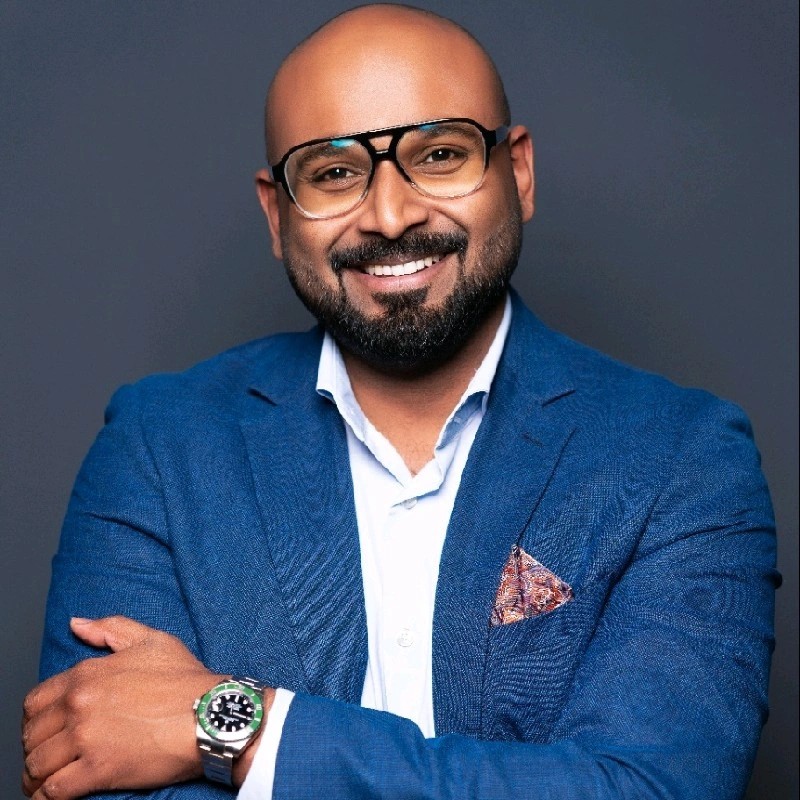
Jamal Kiyasudeen is a Growth Architect and Strategy CEO based in Dubai, UAE. He is the Founder of Strategic Compass and a Certified EFQM Expert and Senior Assessor for the Dubai Quality Award, Sheikh Khalifa Excellence Award, UAE Innovation Award, and Taqdeer Award.
I work with a small number of founders and CEOs each quarter — people who are done with surface-level advice and ready to commit to a strategy that actually gets built.
.jpg)
Yes. While my primary market is the Gulf region, I have worked across four countries and continue to take international engagements. The JK Framework is designed to work across markets — with adjustments for local context where relevant. If you are outside the UAE, reach out and we can discuss whether the engagement makes sense for your situation.
A small number — deliberately. I do not scale my consulting practice by adding more clients. I scale it by going deeper with fewer. At any given time I am working with a handful of founders and CEOs at the Full Engagement level. This ensures every client gets the full version of me — not a diluted version spread across too many engagements at once.
Growth-stage businesses and scaling companies — typically with revenue between $ 1 Million and above, or startups that have found product-market fit and are ready to build the commercial engine. I also work with larger organisations through my assessment and advisory work. If you are not sure whether your business is the right fit, send me a message and I will be honest with you.
Both. The Strategy Sprint is a fixed-scope, fixed-timeline project. The Full Engagement begins as a defined project through Stages 01 to 04 and then transitions to a quarterly retainer for the Evolve stage. The structure is designed to give you certainty at the beginning and flexibility as the engagement matures.
Three ways. First — I diagnose using an EFQM-informed methodology that most consultancies do not have access to. Second — I stay in the room through execution, which most consultancies do not do. Third — every framework I recommend is one I have tested on my own businesses. I eat what I cook. A consultancy sells frameworks built by others. I sell frameworks built by experience and success stories with real impact in growth.
Yes. Strategic Compass is the consulting firm through which all formal engagements are conducted. Visiting strategicompass.com gives you the full picture of available services, engagement structures, and how to apply for an engagement. Both this site and Strategic Compass lead to the same conversations — they are different entry points for the same work.
Most strategies never reach the revenue. Let's close the gap between your plan and your growth.
Whether you need a quick diagnostic or a full transformation, there's a path that fits.
.jpg)
A focused two-to-three week engagement - diagnose the core challenge and deliver a clear strategic direction. No fluff. No endless discovery. Just the answer you need to move.

The full five-stage journey — Diagnose, Architect, Align, Execute, Evolve. I stay in the room through execution. This is where the deepest transformation happens.

Not motivational keynotes — practical frameworks that audiences can use the very next morning. Available for conferences, executive offsites, and MBA programmes.
.png)
"He doesn't just craft messages — he builds narratives that resonate deeply with customers and stakeholders alike. His strategic insights have consistently helped organisations scale profitably and sustainably, even in highly competitive markets."

"What began as a professional engagement soon evolved into a strong friendship and partnership. Jamal's strategic thinking and genuine commitment have made him an invaluable part of our journey."